Boiler replacement and switching to a heat pump: how much the investment costs, what drives up the price, and when does a well-sized system pay off?
When the existing gas boiler still works, most owners do not ask whether they can switch to a heat pump, but whether it is worth making the move now. The costs of a boiler replacement and switch to a heat pump therefore do not consist of a single price, but of a complete investment decision: mechanical systems, electrical-side requirements, heat emitters, controls, and how ready the given building is for low-temperature heating.
At this point, many people want to hear a single final figure right away. That is understandable, but professionally it would be misleading. For a family house, switching to a heat pump is typically an investment of a few million forints, but the exact amount depends on whether only the heat generator is replaced or the whole system needs to be touched as well.
What does the cost of a boiler-to-heat-pump switch actually include?
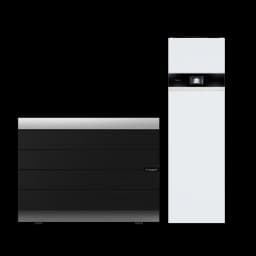
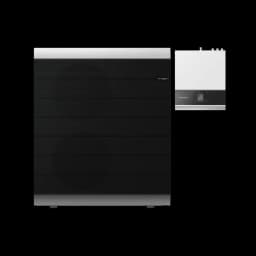
The total cost is made up of several items. The first is the heat pump itself and its hydraulic components. This includes the outdoor and indoor unit, the buffer tank or hydraulic separator, the circulation pumps, the controls, the safety fittings and, in many cases, the domestic hot water tank as well.
The second major block is the installation work. This covers demolition, removal of the old boiler and related components, mechanical modifications, piping, insulation, electrical connection, commissioning and system balancing. This is the part that is often underestimated, even though long-term operational reliability is decided here.
The third item is adaptation to the building. If the existing radiator system was sized for high flow temperatures, radiator replacement, fan coil installation or partial heating modernisation may also be necessary. Houses with underfloor heating or mixed systems are generally in a more favourable position.
What prices should you expect?
For an average existing family house, the total investment cost of switching to an air-to-water heat pump often falls roughly between 3.5-8 million forints. This is not a price rule, but a realistic market range. The lower end is more achievable when the building's heat demand is moderate, the existing system is in good condition, there is no significant electrical upgrade required, and the heat emitters are also suitable.
The upper range typically includes projects where more capacity is needed, the domestic hot water system also has to be replaced, more mechanical modifications are required, or the heat emitters must be modernised too. If expanding the electrical network is also part of the project, that can further increase the investment as a separate item.
With a geothermal system, the cost is typically higher, because the primary-side earthworks or borehole drilling are a significant investment element. In return, such systems can offer more predictable and favourable operation, but for most residential boiler replacements today, the air-to-water heat pump is the more rational choice.
What drives up the cost of switching to a heat pump the most?
The biggest cost driver is usually not the unit itself, but a mismatch between the building, the existing system and the technology. A heat pump works economically when it can provide the required comfort at lower flow temperatures. If that is only possible with 60-70 °C water, efficiency suffers, and the need for system modification arises.
The electrical side is also a significant cost factor. Without a three-phase supply, adequate ampere capacity, dedicated circuits and a compliant connection, there is no safe operation. In an older family house, the network upgrade quite often causes a surprise in the budget.
The project also becomes more expensive if there is no precise heat demand calculation. In that case, an oversized unit can easily end up in the system, unnecessarily increasing the investment cost, or an undersized solution is chosen, which can cause comfort problems in winter and higher operating costs. Engineering design here is not an administrative step, but financial protection.
When is replacing the boiler enough, and when do you need to think in terms of the whole system?
This is the question where most misunderstandings arise. If the house is well insulated, the windows and doors are modern, the heat emitters have a relatively large surface area, and the existing pipe network is in adequate condition, the switch may be achievable with relatively little demolition.
The situation is different in an older building with high heat losses and small radiators. In that case, the heat pump can technically be installed, but economical operation can only be achieved with compromises. Sooner or later the question arises whether the investment should be handled together with a partial energy retrofit of the building.
In many cases, the best solution is not a complete immediate rebuild, but phased modernisation. First the heat generator is switched and the necessary basic mechanical work is done, and later the heat emitters or building insulation can follow. This is especially practical when the budget is fixed but the owner is planning for the long term.
Boiler-to-heat-pump switching costs and payback
The point of the investment is not only the purchase price, but also what operation costs afterwards. A well-sized heat pump system can typically deliver lower heating costs than a conventional fossil-fuel solution, especially with a favourable electricity tariff and suitable building-side conditions.
Payback, however, is not the same for every property. It depends on the current energy consumption, the heat pump's seasonal efficiency, the price of electricity, the domestic hot water demand and whether solar panels are added to the system. Anyone who promises a fixed number without an on-site survey is doing marketing, not giving a technical answer.
For a realistic view of payback, it must also be added that such a system is not merely a question of energy bills. It raises the technical standard of the property, reduces dependence on fossil fuels and, with proper installation, provides stable, well-controllable comfort in heating and, in many cases, cooling as well.
What hidden costs should you ask about in advance?
One hallmark of a fair quote is that it does not price only the unit. It is worth asking separately about modifications to the electrical network, the foundation or outdoor placement, condensate drainage, the domestic hot water tank, noise protection considerations and any restoration needed after removing the chimney connection.
The quality of the controls can be a significant item. A modern heat pump is capable of a lot, but only if the controller and the sensors integrated into the system are properly selected and configured. A lower quoted price can be tempting in the short term, but in the long term the excess consumption caused by poor controls can be expensive.
The service background is not a side issue either. A heat pump system is an investment, not a simple product purchase. The manufacturer's commitment, the commissioning protocol and the subsequent maintenance background directly influence whether the system truly delivers the savings and operational reliability that the planned figures promise.
How can you reduce the investment risk?
The first step is an accurate survey. The starting point must be the heat demand, not the nominal boiler output. This reveals how large a unit is needed, what flow temperature can be expected, and whether intervention is needed on the heat emitter side.
The second is thinking in terms of the whole project. A reliable installer does not just recommend a unit — they also examine the electrical conditions, the hydraulic layout, the controls and the operational goals. Trident's philosophy is built on this too: a well-functioning system begins not with the quote, but with precise design.
The third is keeping an eye on incentive and financing options. For a well-timed investment, government incentive programmes or preferential financing can meaningfully improve the payback. Here too, what matters is that the technical content and the administration do not run on separate tracks.
If you are now facing a boiler replacement, do not look only at how much the heat pump costs. The better question is what kind of system will give the given property lastingly low operating costs, stable comfort and predictable operation. In the long run, the real gain is always measured in that.
Let's talk about your options!
Ügyvezetőnk hétköznap 09:00–17:00 között elérhető.